Pour Decisions: Why Britain's Wine Lists Are Getting Shorter and Much More Fun
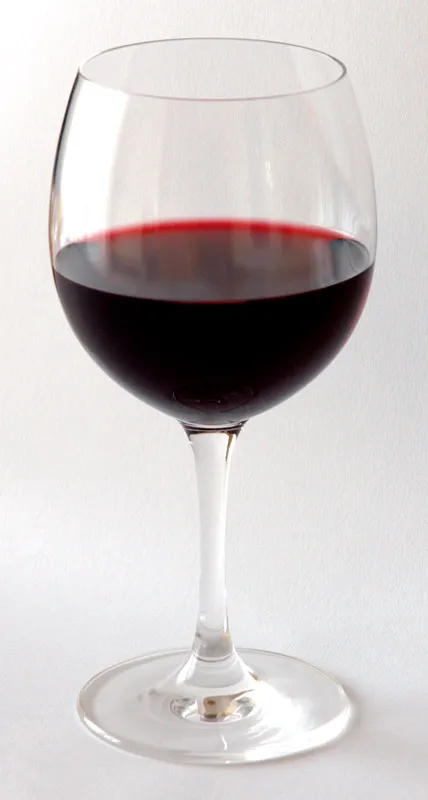
Photo: André Karwath aka Aka, CC BY-SA 3.0, via Wikimedia Commons
The first sign was the A4 card. Where a leather-bound list used to live, there is now a single sheet, laminated, with about fourteen wines on it and eleven of them available by the glass. The second sign was the price: no longer a stingy 125ml at the bottom and a bottle at the top, but a flat, confident spread of pours between five and nine pounds, all sizes, all open, all ready to go.
That's the shift. Across neighbourhood restaurants from Leeds to Bristol to Margate, the by-the-glass list has stopped being a grudging afterthought and started being the whole point. And for anyone who eats out the way most of us actually eat out — two people, mid-week, no ceremony — it has made the wine bit considerably better.
The list shrank. The pleasure grew.
There is a version of this trend that gets blamed on economics, and there's some truth in it. Restaurants are carrying less cash tied up in stock, and a shorter list means less exposure and less waste. Nobody's pretending that isn't part of it.
But wine people aren't fools, and neither are the people running 28-cover bistros on a thin margin. Once you've decided not to lug around 90 bins, an odd kind of freedom arrives. You can put three Jura whites on a list of fourteen. You can have a chilled red from the Loire and an orange wine from Slovenia and a fizz you've never heard of, and you can open all of them at eight tables' worth of punters rather than waiting for one table of six to commit.
Georgia Pike, who runs a 30-seat bistro in Bristol, put it plainly when I asked why her list shrank from fifty to sixteen. 'I don't want to sell somebody a bottle they'll feel obliged to finish,' she said. 'I want to sell them a glass of something that makes them stop talking for a second.'
The technology helped, obviously. Coravin and argon systems, keg wine, better fridge discipline, smaller-format imports. A restaurant can now keep a delicate savagnin alive for a fortnight behind the bar. Five years ago, opening that bottle was a gamble. Now it's a Tuesday.
What the sommeliers are actually saying
The people I spoke to kept returning to one idea: curiosity, not commitment. Nell Fairhurst, who looks after the floor at a small Leeds restaurant, told me the glass list is where her regulars do their learning. 'People order a glass of something odd, decide they love it, and then buy a bottle of it next time. Four years ago they'd have ordered the Pinot Grigio and never branched out.'
The other thread was honesty about markups. Tomás Ó Riada buys wine for an independent importer in Manchester and sees the maths from both sides. His view: a short glass list forces a restaurant to be sharper, because every pour has to justify its place. 'If you've got twelve wines open, all twelve are on trial,' he said. 'It's the opposite of a dusty list where the only thing anyone orders is number four.'
And then there's the practical bit that nobody puts on a chalkboard: fewer bottles, better kept bottles. A wine poured within three days of opening tastes like wine. The same bottle hanging around for a week tastes like regret.
Why £7 a glass beats £30 a bottle
Let's do the arithmetic, because the arithmetic is the argument. A £7 glass at 175ml is roughly £30 a bottle. That sounds like a wash — until you notice what kind of bottle a bistro sells for £30. Usually it's something that retail would charge nine or ten pounds for: perfectly nice, entirely unmemorable, bought to sit in the middle of the list and behave.
A £7 glass, though, is often the restaurant's third or fourth most interesting wine, the one they'd price at £40-45 as a bottle. So you're drinking the £42 bottle for the price of the £30 one. You're just not drinking all of it.
And that's the real gift. Conversation about wine tends to assume we all want 750ml of the stuff, but most tables don't. Two people, one of whom is driving or on the early train, or one of whom really wants the red and the other really wants the white — a bottle is an awkward solution to that problem. Two glasses, different, is the perfect one.
The indulgence calculus changes too. A £7 glass of something distinctive, chosen well, drunk with food, is a better use of money than a £9 cocktail you'll forget by the coat rack. It's a small pleasure, precisely taken. That's the whole brief.
How to order well when there's no sommelier
Most of these restaurants have one person on the floor who knows the list and no dedicated wine staff. That's fine. The following works nearly anywhere.
Ask what's just been opened. A glass from a bottle that's been flowing all evening tastes better than one poured from something opened on Monday. It also tells you what the staff are excited about.
Ask for a taste. A good bistro will pour you ten millilitres of two candidates without blinking. If they won't, that's information too.
Ask what they'd drink with your dish. Not 'what pairs' — literally what they'd drink, standing in your shoes, on their dinner break. The answer is usually better than the pairing note.
Order by the glass in two rounds rather than one bottle. Start with the fresher thing, finish with the darker thing. You'll learn more about the list and you'll enjoy the food more, because the second glass actually fits the main course.
Watch the pour. There's a difference between 125ml and 175ml, and it's on the menu more often than it used to be. If the listed price is a small pour, an honest bistro will say so.
The catch: someone has to pay for the open bottles
By-the-glass programmes are not free to run. Waste, chill, staff training, gas, and the sheer courage required to open a forty-quid bottle for one lunchtime customer who may not order it — all of it lands somewhere. That's why the gap between a glass and its bottle equivalent is sometimes wider than feels fair, and why some places quietly nudge you toward the bottle.
Fine. Ask, choose, and drink what you want. But it's worth saying plainly to the restaurants doing this well: keep the list short, keep the odd stuff open, keep the pours honest, and we'll keep ordering the strange white from the Jura at £7.50 a glass.
Because that's the note this trend is playing. Not austerity, not thrift for its own sake. Just the pleasure of a single, well-chosen pour, cold, correct, on a damp Tuesday in November, with a plate of something slow-cooked arriving right behind it. Everyday indulgence doesn't always come in a 75cl bottle. Often it comes in a glass, and a small one, and a strange one that somebody behind the bar was brave enough to open.