The Late Shift: Nine British Apples That Peak After the First Frost
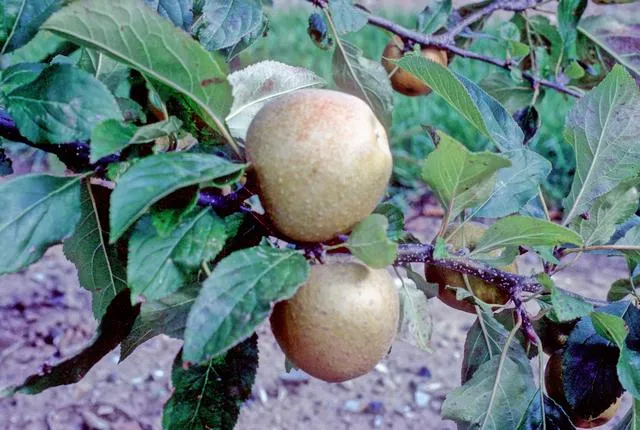
Photo: National Fruit Collection, Brogdale., OGL 2, via Wikimedia Commons
The apple season has a publicity problem. Everyone gets excited in September, fills a bag at a pick-your-own, posts a photo of a Bramley the size of a baby's head, and then quietly forgets about the whole business by bonfire night. Which is a shame, because November is when the interesting stuff happens. The early, easy apples have gone. What's left is the stubborn, russeted, thick-skinned end of the orchard — fruit that has spent weeks in cold store or hung on the tree until the frost got to it, developing the kind of flavour that makes you stop mid-chew.
The 2026 harvest has been a good one for late varieties in most of the country: a warm, dry late summer followed by cool nights has meant firm flesh and decent sugar. Growers I've spoken to are quietly pleased, which in apple terms is practically a parade. So here are nine British apples worth seeking out right now, from the sharp little thugs that belong on a cheese board to the soft, nutty things that collapse into a crumble without a fight.
The Russet Revival
Egremont Russet is the gateway drug. It looks like a potato that's been in a fight — rough, bronze, sometimes a bit lopsided — and it tastes like pear drops and hazelnut with a squeeze of lemon. Grown in Sussex since the 1870s, it's still the benchmark for that dry, nutty russet flavour. Eat it thin-sliced with a chunk of aged Cheddar, or grate it into a stuffing with sausage meat and sage. It holds its shape just long enough to be useful.
Ashmead's Kernel is the louder cousin. Raised in Gloucester in the 1700s, it's small, hard and aggressively flavoured: sharp at first, then a wave of sugary pear and something almost sherbetty. It's not a snacking apple for the faint-hearted. Serve it with blue cheese, or juice it with a sweeter apple to stop your face imploding. It stores well into the new year, which makes it a useful thing to have in the shed.
Orleans Reinette is the one I'd put on a table to impress people who think they don't like apples. It's an old French variety that settled happily in Britain, with a dull russeted skin and a rich, almost pineapple-like sweetness. Think tarte tatin, or thick slices alongside a slab of quince paste. It's at its best from November to January, which is exactly when you need it.
The Sharp End
Sturmer Pippin is the cheese board apple. Raised in Essex in the 1800s, it's hard, green-gold and bracingly sharp, with a flavour that mellows into something almost tropical after a few weeks in storage. It's the kind of apple that makes a lump of Wensleydale taste like a proper event. Buy a bag, leave it in a cool room, and eat it between now and February.
Ribston Pippin is the ancestor of Cox's Orange Pippin, and you can taste the family resemblance: rich, aromatic, a bit sharp, with a honeyed finish. It's a Herefordshire hero from the 1700s, and it deserves more than a footnote in the Cox story. Eat it raw, or bake it whole with brown sugar and a splash of cider.
Adams Pearmain is the odd-shaped one — long, pear-like, with a dry, nutty flesh and a gentle sharpness. It's a Victorian favourite that fell out of fashion, but it's worth hunting down at farmers' markets. Slice it into a salad with bitter leaves and blue cheese, or just eat it walking around the garden while you pretend to be doing something useful.
The Aromatic Weirdos
D'Arcy Spice is the star of this particular show. Raised at Tolleshunt D'Arcy Hall in Essex before 1840, it's a late picker — often not ready until November — and it improves in storage, developing a spicy, almost clove-like flavour that's unlike anything else. It's not for everyone. It's for people who like their apples with a bit of attitude. Serve it with mature Cheddar and a glass of something dry.
Cornish Gilliflower is another aromatic one, with a scent that fills a room before you've even cut into it. It's an old Cornish variety, knobbly and pale, with a rich, floral flavour that's best eaten fresh. Don't cook it — it's too good raw. Slice it with a sharp knife, sit down, and pay attention.
Blenheim Orange is the big, blowsy dual-purpose apple that makes a proper crumble. It's nutty and sweet with a bit of sharpness, and it collapses beautifully when baked. It's also good raw if you catch it at the right moment. Use it for a crumble with blackberries, or roast it with pork and fennel seed.
The November Argument
Here's the thing: none of these apples are fashionable. They're not uniform. They don't stack neatly in a supermarket display. They're the kind of fruit that gets labelled "heritage" and then ignored in favour of something shinier from the other side of the world. But the 2026 harvest is a reminder that British orchards can still produce apples with real character — fruit that tastes of where it was grown and when it was picked.
So buy a bag of something unfamiliar this week. Ask the person at the market stall what's good. Cut it into slices, put it next to some cheese, and see what happens. November might not be the obvious month for an apple celebration, but it's the one where the best apples are still waiting.